Description
OMC/Johnson/Evinrude Head Gasket – Restore Compression & Proper Cylinder Sealing
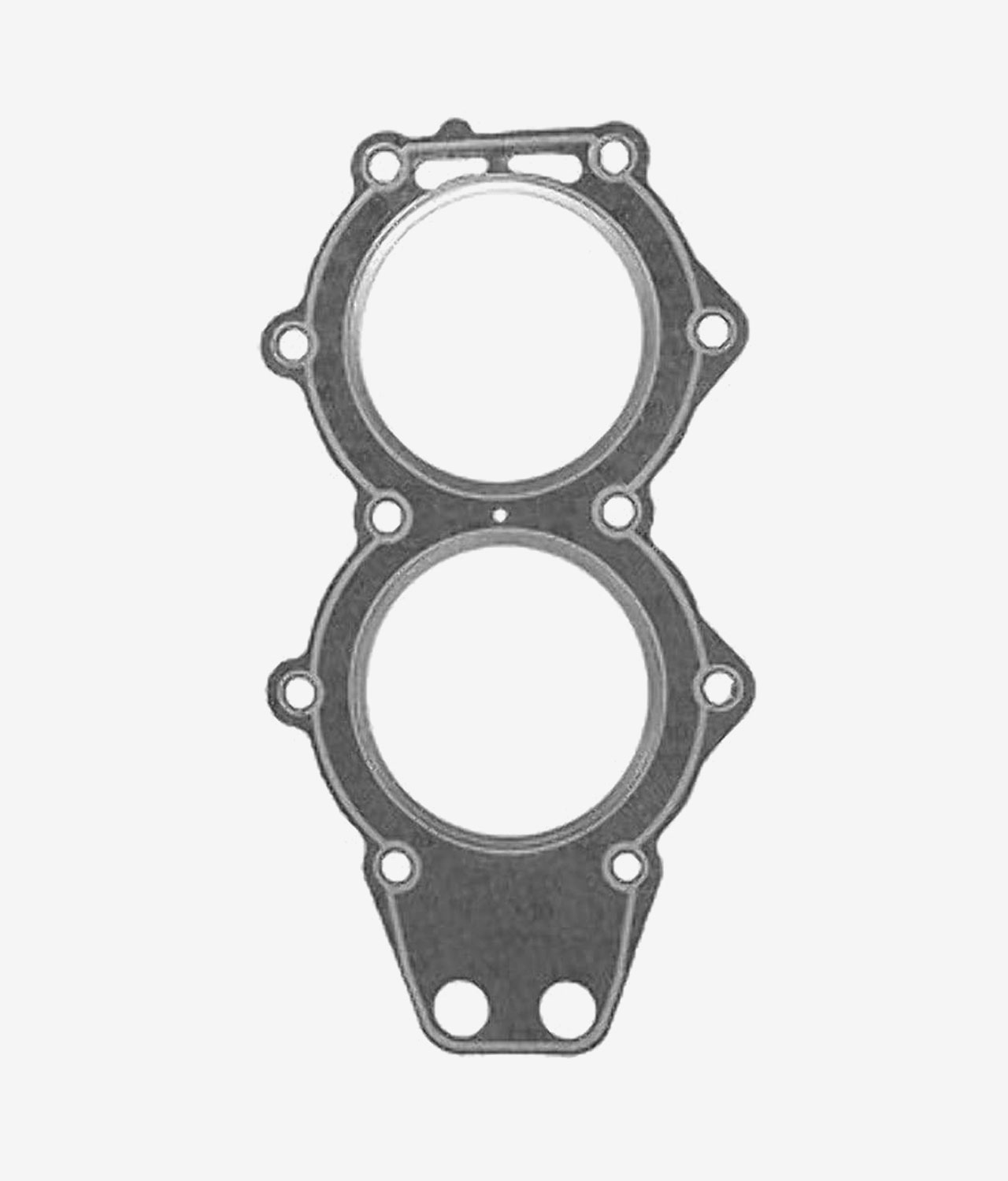
The Cylinder Head Gasket, is used on select OMC, Johnson and Evinrude 2-cylinder loop-charged outboard engines to seal the cylinder head to the engine block.
The head gasket is one of the most important sealing components in the powerhead. It must contain combustion pressure inside the cylinders while also keeping cooling water properly separated from the combustion chambers.
When the gasket begins to fail, engine performance and reliability can deteriorate quickly. A damaged head gasket may allow compression to escape, cooling water to enter the cylinder, or combustion gases to interfere with the cooling system.
For that reason, head gasket condition is especially important on outboards that operate under sustained load, elevated RPM, or racing conditions.
Common Signs of a Failing Head Gasket
Possible symptoms may include:
- Low compression on one or both cylinders
- Uneven compression readings
- Hard starting
- Loss of power
- Rough or inconsistent idle
- Poor acceleration
- Engine overheating
- Water or moisture inside a cylinder
- Steam or unusual exhaust appearance
- Spark plugs that appear unusually clean or washed
- Combustion leakage around the cylinder head
- Cooling-system pressure abnormalities
- Repeated overheating with no obvious external cause
A failed head gasket is not the only possible cause of these symptoms, so proper diagnosis and compression testing are recommended before replacing parts.
Why the Head Gasket Matters
The head gasket performs several important jobs at the same time.
It must:
- Seal combustion pressure inside the cylinders
- Maintain proper compression
- Prevent cooling water from entering the combustion chambers
- Keep combustion gases out of the cooling passages
- Maintain a reliable seal between the cylinder head and block
If that seal is compromised, engine performance can drop and internal damage can occur.
Water entering a cylinder can lead to corrosion, poor combustion, or serious engine damage. Combustion gases entering the cooling system can also contribute to overheating and inconsistent cooling.
Key Features & Benefits
- Maintains Cylinder Compression – Helps keep combustion pressure contained inside the cylinder
- Prevents Water Intrusion – Separates the combustion chamber from cooling passages
- Supports Reliable Engine Performance – Proper sealing helps maintain consistent power and combustion
- Helps Prevent Overheating Issues – Keeps combustion pressure from disrupting the cooling system
- Ideal for Powerhead Rebuilds – Important replacement item whenever the cylinder head is removed
- Suitable for Performance Engines – Critical for engines operating under sustained load and high RPM
- Broad 2-Cylinder Fitment – Used on many large loop-charged OMC/Johnson/Evinrude outboards
Common Horsepower Applications
- 40 HP
- 45 HP
- 48 HP
- 50 HP
- 55 HP
- 60 HP
These generally use the large 2-cylinder loop-charged, 44.9 ci / 737cc engine family from approximately 1976 through 2005. Johnson and Evinrude used different cylinder heads and engine configurations across model years, horsepower alone should not be used to confirm fitment. Always verify the engine model number and OEM part number before ordering.
When Should Head Gasket Be Replaced?
Replacement should be considered when:
- Compression is low or uneven
- Cooling water is entering the cylinder
- The engine has experienced significant overheating
- The cylinder head has been removed
- The gasket shows visible combustion leakage
- The engine is undergoing a powerhead rebuild
- The cylinder head or block sealing surface has been serviced
- The existing gasket is damaged, crushed, or deteriorated
A used head gasket should generally not be reused once the cylinder head has been removed.
Inspect the Cylinder Head & Block During Service
When replacing the head gasket, inspect both mating surfaces carefully.
Look for:
- Warpage
- Corrosion
- Pitting
- Carbon buildup
- Erosion around cooling passages
- Damaged sealing surfaces
- Evidence of previous combustion leakage
Installing a new gasket between damaged or warped surfaces may result in another gasket failure.
The cylinder head should be checked for flatness according to the appropriate service specifications before reassembly.
Performance & Racing Considerations
For performance and racing outboards, proper head gasket sealing becomes even more important because cylinder pressure and engine load are consistently high.
A small sealing problem that may initially appear minor can quickly turn into compression loss, overheating, or cylinder damage when the engine is operated at race RPM.
At Liquid Revolutions, we understand the importance of reliable cylinder sealing on Johnson/Evinrude performance engines. Whether you’re refreshing an SST-45 powerhead or rebuilding a recreational motor, the head gasket is not a place to take chances.
A properly installed head gasket helps maintain consistent compression, dependable cooling, and reliable performance throughout the engine’s operating range.
Recommended During a Powerhead Rebuild
Whenever the cylinder head is removed, also inspect:
- Cylinder head surface
- Engine block sealing surface
- Thermostat and cooling passages
- Cylinder condition
- Piston crowns
- Spark plugs
- Head bolts
- Compression readings
Replacing the gasket while addressing any underlying cooling, compression, or sealing issue helps reduce the chance of repeat failure.
Always verify your engine model number, year, and OEM part number before ordering to confirm correct fitment.