Description
Lower Crankshaft Bearing – Maintain Proper Crankshaft Support & Engine Reliability
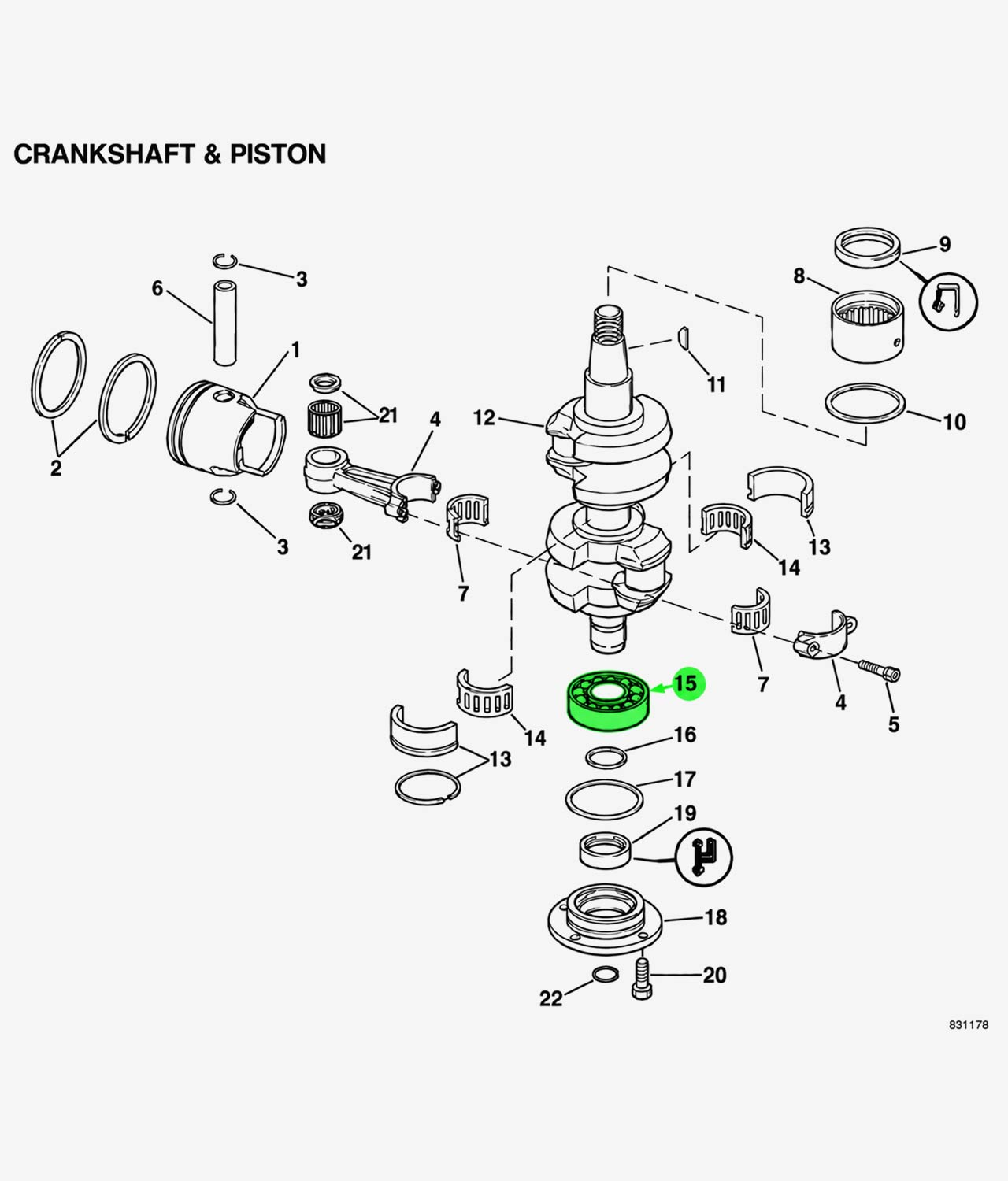
The Lower Crankshaft Bearing is used on select OMC, Johnson and Evinrude outboard engines to support the lower portion of the crankshaft and allow smooth rotation under engine load.
The lower crankshaft bearing is a critical part of the powerhead because it helps keep the crankshaft properly supported and aligned while the engine operates. Every combustion event places load on the crankshaft, and the bearing must handle that force while allowing the crankshaft to rotate with minimal friction.
When the bearing becomes worn, corroded, pitted, overheated, or develops excessive clearance, crankshaft stability can be affected. If ignored, bearing wear can lead to additional damage to the crankshaft, seals, crankcase, and other internal engine components.
Common Signs of a Worn or Damaged Lower Crankshaft Bearing
Possible symptoms or inspection findings may include:
- Rumbling, growling, or knocking noises from the powerhead
- Increased engine vibration
- Excessive crankshaft movement or play
- Rough or inconsistent engine operation
- Metallic debris inside the powerhead
- Pitting or corrosion on bearing surfaces
- Roughness when rotating the crankshaft by hand
- Heat discoloration or signs of overheating
- Premature lower crankshaft seal wear
- Damage to the crankshaft journal
- Reduced reliability at higher RPM
Because several internal engine problems can create similar symptoms, proper disassembly and inspection are important before determining that the lower bearing is the source of the issue.
Why the Lower Crankshaft Bearing Matters
The lower crankshaft bearing helps support the crankshaft at one of its primary load points.
If this bearing develops excessive clearance or surface damage, the crankshaft may begin to move beyond its intended operating position. That extra movement can place additional stress on:
- Lower crankshaft seal
- Crankshaft journal
- Center crankshaft bearings
- Upper crankshaft bearing
- Connecting rod bearings
- Crankcase bearing surfaces
- Other internal rotating components
Maintaining proper crankshaft support is especially important in two-stroke outboards where the engine regularly operates at high RPM.
Key Features & Benefits
- Supports the Lower Crankshaft – Helps maintain proper crankshaft position and alignment
- Promotes Smooth Rotation – Reduces friction between moving engine components
- Helps Maintain Engine Reliability – Replacing a damaged bearing can help protect surrounding powerhead components
- Protects Crankshaft Seals – Proper crankshaft support helps reduce unwanted movement at the seal surface
- Ideal for Powerhead Rebuilds – Important inspection or replacement item during internal engine service
- Suitable for Performance Applications – Useful for engines subjected to sustained high RPM and heavy load
When Should Lower Crankshaft Bearing Be Replaced?
Replacement should be considered when:
- The bearing feels rough or binds during inspection
- Bearing surfaces show pitting or corrosion
- Excessive crankshaft clearance is present
- The bearing shows heat discoloration
- Metal contamination has circulated through the engine
- The lower crankshaft journal has been damaged
- The engine experienced overheating or lubrication failure
- The powerhead is undergoing a complete rebuild and bearing condition is questionable
Any bearing that has been subjected to a major internal engine failure should be inspected carefully before reuse.
Inspect the Related Components
Whenever the lower crankshaft bearing is being serviced, inspect the surrounding components at the same time, including:
- Lower crankshaft seal
- Crankshaft journal
- Center crankshaft bearings
- Split bearing liners
- Upper crankshaft bearing
- Connecting rod bearings
- Crankcase bearing surfaces
A new bearing installed against a damaged crankshaft journal or worn mating surface may fail prematurely.
Performance & Racing Considerations
For performance and race engines, lower crankshaft bearing condition becomes even more important because the engine spends more time operating at elevated RPM and under sustained load.
At Liquid Revolutions, we know that crankshaft stability is critical to both performance and reliability. A bearing that may seem only slightly worn during inspection can become a much larger problem once the engine is repeatedly run at racing RPM.
Whether you’re rebuilding a recreational OMC/Johnson/Evinrude outboard or servicing a performance or race powerhead, properly inspecting and replacing a worn lower crankshaft bearing helps protect the crankshaft, seals, and the rest of the rotating assembly.
Always verify your engine model number, year, and OEM part number before ordering to confirm proper fitment.