Description
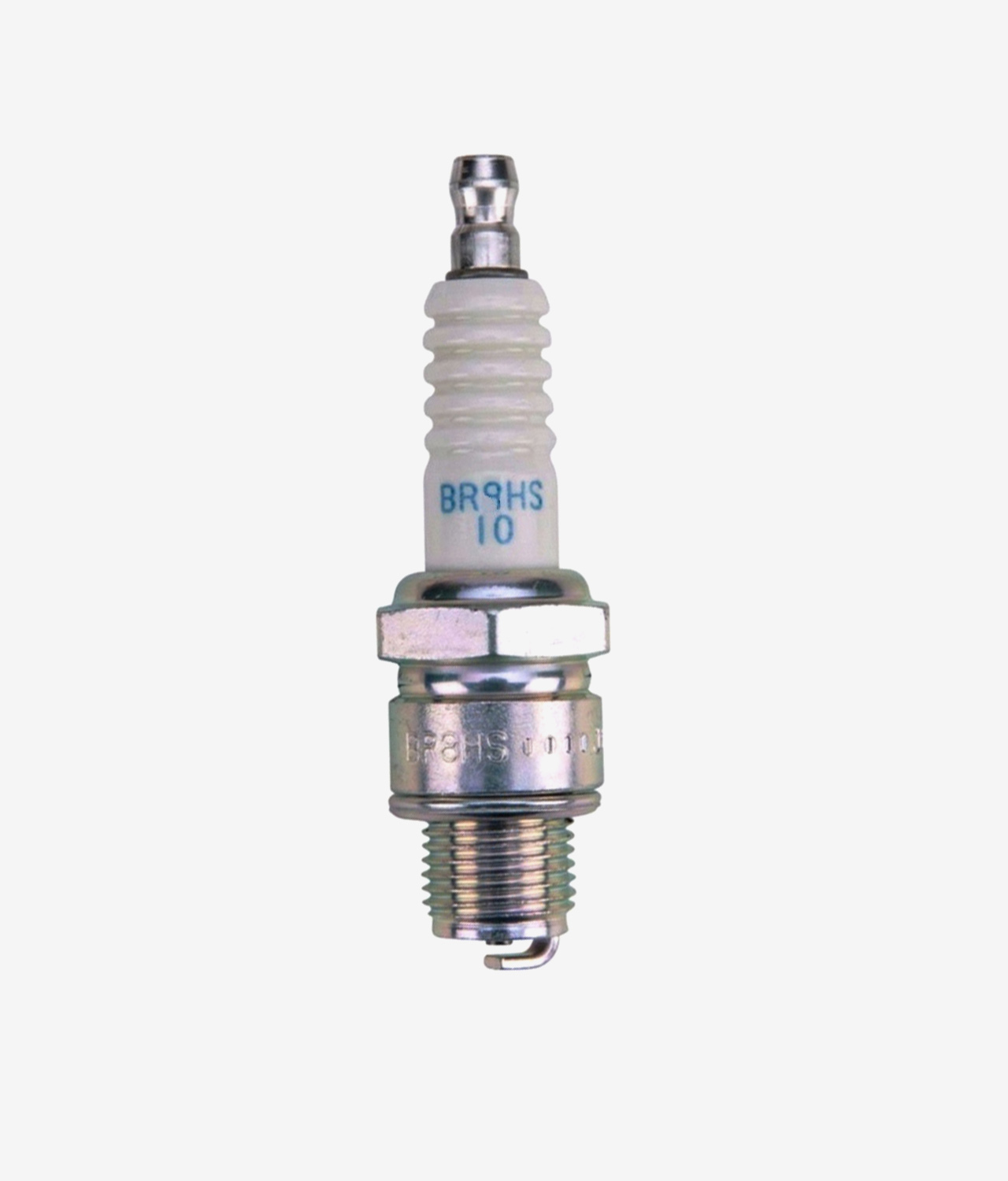
NGK BR9HS-10 Spark Plug 4551
The NGK BR9HS-10, NGK Stock No. 4551, is a resistor-type spark plug used in select Johnson/Evinrude 2-stroke outboards and performance marine applications.
For SST-45 / Formula Light racers, the BR9HS-10 is a popular plug choice because it combines the correct short-reach marine-style configuration with NGK’s colder heat range 9, making it well suited to high-RPM 2-stroke operation when appropriate for the engine setup.
Spark Plug Specifications
- Manufacturer: NGK
- NGK Part Number: BR9HS-10
- NGK Stock Number: 4551
- Thread Diameter: 14 mm
- Thread Reach: 1/2 in. / 12.7 mm
- Hex Size: 13/16 in.
- Seat Type: Gasket
- Resistor Type: Yes
- NGK Heat Range: 9
- Factory Gap Designation: 1.0 mm / .040 in.
- Application: Select 2-stroke marine outboards and SST-45 racing applications
NGK’s numbering system identifies the R as a resistor plug, 9 as the heat range, H as the 12.7 mm thread reach, and -10 as the 1.0 mm factory gap designation. NGK Spark Plugs
What the Spark Plug Does
The spark plug ignites the compressed air/fuel mixture inside the cylinder.
On a 2-stroke outboard, plug condition can have a noticeable effect on:
- Starting
- Idle quality
- Acceleration
- High-RPM performance
- Misfire resistance
- Combustion consistency
- Engine tuning
Because the plug is exposed directly to combustion, it can also provide useful information about how the engine is running.
Stock Johnson/Evinrude Applications
The BR9HS-10 is used as an NGK replacement plug in select Johnson/Evinrude marine applications.
NGK cross-reference information also identifies BR9HS-10 / 4551 as an equivalent for Champion QL78C.
NGK marine application guides list BR9HS-10 as the resistor option in several high-performance Evinrude applications using a 1.0 mm (.040″) gap.
Because Johnson/Evinrude used different plugs across different horsepower, ignition, and combustion-chamber configurations, always verify the recommended plug for the exact engine rather than selecting by horsepower alone.
SST45 / Formula Light Application
For SST45 / Formula Light, spark plugs are more than a routine maintenance item.
At Liquid Revolutions, we regularly inspect plugs because they can provide a quick indication of how each cylinder is running and can help identify ignition, carburetion, or fuel-delivery problems before they become larger issues.
The BR9HS-10 is well suited to this type of use because its NGK heat range 9 is on the colder end of NGK’s scale. NGK’s numbering system works opposite of some other brands: higher NGK numbers represent colder plugs.
That colder heat range is useful in engines that operate for extended periods at high RPM, provided it matches the engine’s required specification and setup.
Understanding the BR9HS-10 Number
The NGK part number itself provides useful information:
B – 14 mm thread diameter
R – Resistor spark plug
9 – NGK heat range 9
H – 12.7 mm / 1/2-inch thread reach
S – Standard electrode design
-10 – Factory gap designation of 1.0 mm / .040 inch
This makes BR9HS-10 easy to distinguish from similar plugs that may have a different heat range, reach, resistor configuration, or gap.
Why the Resistor Matters
The R in BR9HS-10 indicates that the plug contains an internal resistor.
Resistor plugs help reduce electrical interference generated by the ignition system.
This can be useful around:
- Electronic ignition components
- Gauges
- Data acquisition systems
- Radios
- Other onboard electronics
The resistor does not eliminate the need for a properly functioning ignition system, but it helps reduce unwanted electrical noise.
Spark Plug Gap
The BR9HS-10 is manufactured with a 1.0 mm (.040″) gap designation.
However, NGK recommends checking the gap before installation because the factory gap may not be the correct specification for every engine that uses the plug.
For stock engines, follow the manufacturer’s specified gap.
For race engines, use the gap required by your ignition system and engine setup rather than automatically assuming the factory gap is ideal.
When adjusting the gap, move only the ground electrode and avoid placing pressure on the center electrode or insulator.
Common Signs a Spark Plug Should Be Replaced
Replace or inspect the plug if you find:
- Heavy carbon fouling
- Oil fouling
- Fuel-wet plug
- Worn center electrode
- Rounded ground electrode
- Cracked porcelain
- Damaged threads
- Excessive deposits
- Corrosion
- Evidence of overheating
- Intermittent misfire
Spark plugs are relatively inexpensive compared with the time spent troubleshooting an ignition problem caused by a questionable plug.
Reading Spark Plugs on a 2-Stroke
Spark plug appearance can provide useful diagnostic information, especially when comparing cylinders.
Look for differences in:
- Electrode color
- Carbon buildup
- Fuel wetness
- Oil deposits
- Signs of excessive heat
- Deposits between cylinders
If one cylinder’s plug looks dramatically different from the other, that can help point toward a problem with:
- Ignition
- Carburetion
- Fuel delivery
- Reed operation
- Compression
- Cooling
Plug reading should be used as one diagnostic tool rather than the only indicator of mixture or engine health.
Installation Tips
Before installing new spark plugs:
- Inspect the plug threads
- Verify the correct part number
- Check the gap
- Inspect the plug wire and boot
- Thread the plug in by hand first
- Avoid cross-threading the aluminum cylinder head
- Tighten to the correct specification for the engine
If the plug does not thread smoothly by hand, stop and inspect the threads before using a wrench.
Key Features & Benefits
- NGK Stock No. 4551 – Genuine BR9HS-10 identification
- Resistor Plug – Helps reduce ignition-related electrical interference
- NGK Heat Range 9 – Cold-range plug suitable for demanding marine applications when specified
- Johnson/Evinrude Applications – Used as an NGK replacement in select OMC outboards
- SST-45 / Formula Light Use – Well suited for performance and race-engine maintenance
- Champion Cross Reference – NGK lists BR9HS-10 / 4551 as a cross-reference for Champion QL78C
Performance & Racing Considerations
For an SST-45 race engine, spark plug inspection is one of the fastest checks that can be performed between sessions.
At Liquid Revolutions, we use plug condition as part of the overall picture when evaluating how the engine is running. Differences between cylinders can help point us toward a fuel, ignition, compression, or cooling issue before we start replacing parts.
A fresh set of properly gapped plugs also removes one variable when troubleshooting a high-RPM miss or inconsistent engine performance.
The NGK BR9HS-10 4551 provides a proven resistor-style marine plug with the correct short-reach configuration for applicable Johnson/Evinrude and SST-45 applications.
For modified or racing engines, always use the plug specification and gap appropriate for the actual engine and ignition setup rather than relying only on a general stock application.